
How Seasonal Buying Can Cut Your Baking Costs by 40%
Timing your ingredient purchases around seasonal availability isn't just for fresh produce - it applies to many baking staples too. Learn how to align your baking calendar with market prices for maximum savings.
The Seasonal Price Cycle of Common Baking Ingredients
Prices fluctuate throughout the year based on harvest cycles and demand:
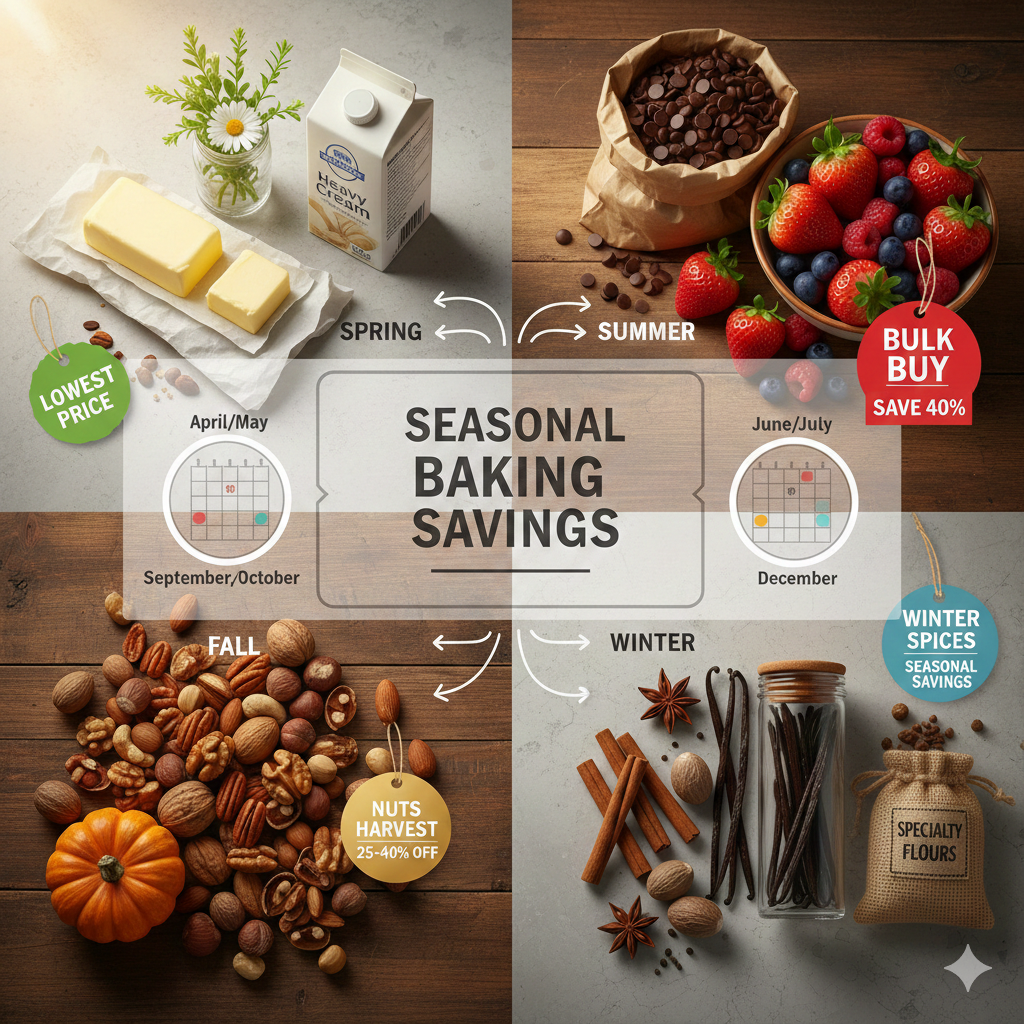
- Butter & Dairy: Lowest prices in spring (April-May) when milk production peaks. Highest around holidays when demand surges.
- Nuts: Best prices in fall (September-November) after harvest. Almonds, walnuts, and pecans see 25-40% price drops.
- Spices: Vanilla beans cheapest in early fall, cinnamon and nutmeg most affordable in winter months.
- Chocolate: Cocoa prices often drop in summer before holiday baking season begins.
Strategic Baking Calendar
Plan your baking projects around ingredient costs:
- Spring: Stock up on butter, cream, and dairy-based ingredients
- Summer: Buy chocolate in bulk, focus on berry-based recipes when fruits are plentiful
- Fall: Purchase nuts, pumpkin, apple-related ingredients
- Winter: Buy spices, dried fruits, and specialty flours
Calculator Tip:
Use our calculator's price tracking feature to note seasonal price variations. Create multiple price entries for the same ingredient and label them by season to build your personal price database.
Freeze for Off-Season:
Buy seasonal ingredients at their peak and freeze them. Berries, nuts, and even butter freeze beautifully, letting you enjoy seasonal prices year-round.
Sources: USDA Agricultural Marketing Service price data, seasonal buying guides from cooperative extension services, and price trend analysis from food industry publications in the public domain.